Posts

Showing posts with the label hauntology

The Caretaker, and the patience of listening

Image
One of the mini-essays in Mark Fisher's fractured but brilliant book Ghosts of My Life (Zero Books, 2013) discusses Grant Gee's 2011 film Patience (After Sebald) , where the film-maker 'replays' W.G. Sebald's walk along the Suffolk coast in his prose-work The Rings of Saturn . Fisher's interest in the film is reflected in the more general themes of the book: on forms of 'formal nostalgia' in today's popular culture, not so much feeling nostalgic for the past as endlessly recycling past cultural forms; and the traces of a 'popular modernism' in forms of pop and electronic music that push beyond this redundancy and lack of innovation. Gee's film, like Sebald's work, plays with the idea of memory being embedded in a landscape, and therefore with the question of how one confronts that past-in-the-present, what an ethical or political stance towards it would look like. Fisher was largely unimpressed with Sebald's writing and ambivalen...
Staying awake in Dasha Rush's sonic poems

Image
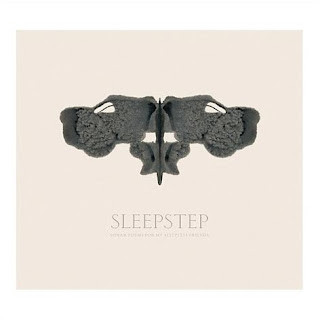
[ The first of a series of posts on sleeplessness in music - see part 2 ] With its crisp, piercing cover imagery of a Rorschach drawing, Dasha Rush's Sleepstep sets itself up as an album about dreaming. The picture suggests a record which probes unconscious desires, or perhaps a record which itself allows for desire (of course, as you read into the drawing you project whatever you see on to the album), which opens you up into a dream-world where those hidden thoughts will be made manifest in musical patterns. But the subtitle of the album suggests something less clear than the way many reviewers read into the record. 'Sonar poems for my sleepless friends' leaves you with questions: is Dasha bringing back messages from her own subconscious, to soothe her friends' pain? Is she trying to induce a hypnotic sleeping state in them – that is, is this a cure? To me, the record feels most like a set of consolations for the wakeful, but more than that, an ode to the period whe...

Ghosts in musical debris: an aesthetics of sampling

I've been thinking for a while now about what it is that I find so appealing, as a listener and composer, about techniques of sampling in music. Considering that sampling can be defined quite broadly – simply as the recording and then editing of sounds from one piece of music for use in one's own piece of music – it's interesting that the things listeners tend to identify as 'samples' (at least within experimental electronic music) often share quite similar aesthetic properties and cultural associations. The act of sampling does not in itself necessitate these particular associations and understandings. In contemporary EEM, the typical aesthetic characteristic of the sample is the audibility of its constitution as a sample. The very fact that the sound has been taken from another musical piece is something the musician-as-sampler often either tries to communicate or does not cover up. This can be communicated within the track in a variety of ways. The sampled elem...